Good oral health requires more than routine dental care. Some complex conditions need surgical treatment to protect teeth, gums, and jaw structures. Choosing trusted dental hospitals in Hyderabad can help patients access specialized oral surgery when needed.
What Is Oral Surgery and When Is It Needed?
When routine dental methods fall short, surgical intervention can restore health to complicated problems affecting the mouth, teeth, and facial structures. Oral surgeons are trained to perform procedures involving teeth, jawbones, and soft tissues. Surgery may be needed for impacted or severely damaged teeth, jaw problems, infections, cysts, or tooth replacement procedures such as Best Orthodontist in Hyderabad . Timely treatment can help protect surrounding teeth, bone, nerves, and other oral structures.
Addressing Impacted Teeth and Preventing Future Complications
Wisdom teeth may fail to emerge normally when there is insufficient space within the jaw. They can become partially or completely trapped beneath the gum or bone. Although an impacted tooth may not cause immediate symptoms, it can eventually contribute to pain, inflammation, infection, food accumulation, or pressure on neighboring teeth.
Removing an impacted wisdom tooth can prevent repeated infections, discomfort, and damage to nearby teeth. Depending on the procedure, advanced options such as Best Laser Dentistry Treatment In Hyderabad may support comfortable and precise dental care. Following proper aftercare also helps promote smooth healing.
Restorative Benefits of Dental Implants
The absence of a tooth can alter chewing ability while also affecting the natural look of the mouth. When a tooth is missing, the jawbone beneath it may gradually lose volume because it no longer receives normal stimulation. Over time, this can contribute to changes in facial support, movement of neighboring teeth, and difficulties with future tooth replacement.
Dental implants provide a way to replace the root and visible portion of a missing tooth. A dental implant is anchored within the jaw to create a stable artificial root as the surrounding bone gradually grows around it. After healing, it can support a crown or another dental restoration. This provides a stable replacement while helping preserve bone at the missing-tooth site. Replacing the tooth can also restore chewing ability and improve everyday oral function.
Corrective Jaw Surgery and Its Role in Functional Health
Problems involving the relationship between the upper and lower jaws can sometimes interfere with normal biting, chewing, speaking, or breathing. While orthodontic treatment can move teeth into better positions, it cannot correct every skeletal irregularity. Structural jaw imbalances that interfere with normal bite patterns may require carefully planned orthognathic treatment.
Corrective jaw surgery involves repositioning the jaws to create a more functional relationship between them. Improved alignment can make chewing more efficient and may reduce uneven pressure on the teeth. It can also help decrease stress on the temporomandibular joints in appropriate cases. Depending on the condition, improving jaw position may also support better airway function. While facial balance may change as a result, improving oral function remains an important objective of treatment.
Eliminating Oral Pathology for Long-Term Safety
Changes inside the mouth should not always be assumed to be ordinary dental problems. Persistent sores, unexplained lumps, swelling, unusual tissue changes, or abnormal growths may require professional evaluation. An oral surgeon may investigate abnormal areas by taking a biopsy or surgically excising the affected tissue when appropriate.
The purpose of examining abnormal tissue is to determine its exact cause. Some growths are harmless, while others may enlarge and affect nearby teeth, nerves, or bone. Abnormal oral lesions can sometimes be linked to serious conditions, requiring timely diagnosis and treatment. Removing suspicious tissue and sending it for pathological examination can provide an accurate diagnosis and help determine whether further treatment or monitoring is needed.
Surgical Root Canal Therapy for Complex Infections
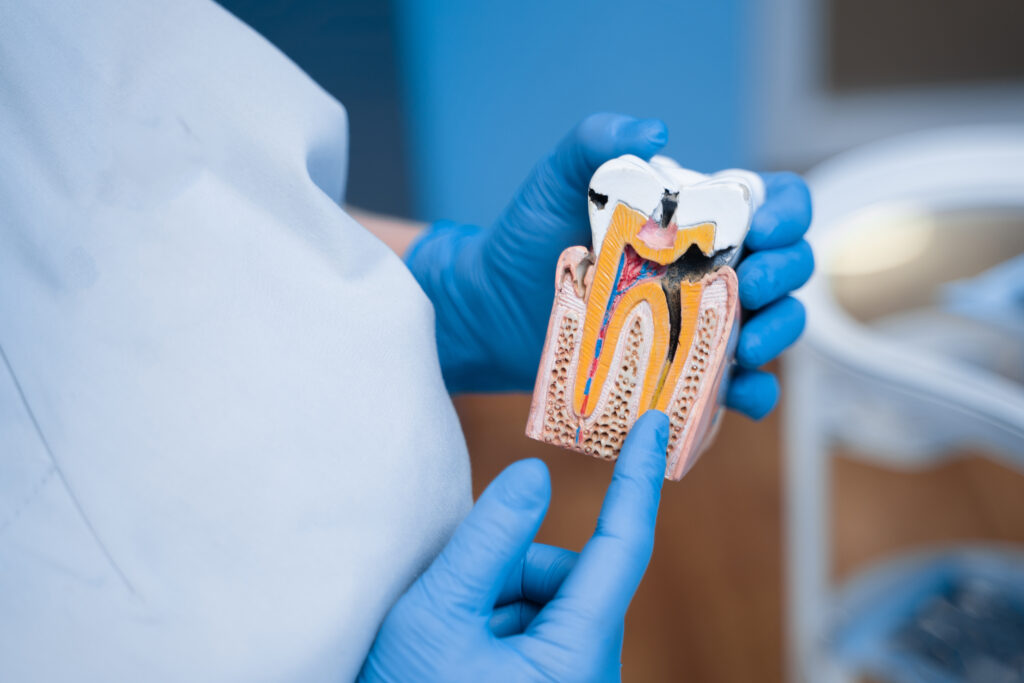
Root canal treatment does not always eliminate an infection completely. In some cases, infection can remain around the end of a tooth root, particularly when conventional treatment cannot adequately reach or treat the affected area. When the tooth can still be preserved, an apicoectomy may provide another treatment option.
During an apicoectomy, the surgeon removes the infected root tip and surrounding affected tissue before sealing the remaining root end. This procedure aims to control persistent infection while preserving the natural tooth. Saving the natural tooth may help retain bone support and keep nearby teeth in their natural positions. For suitable patients, surgical root canal therapy may therefore prevent the need for extraction.
Conclusion
Advanced oral conditions may demand surgical solutions to restore the health and function of affected structures. Procedures such as wisdom tooth removal, dental implants, jaw correction, and apicoectomy can protect oral structures, restore function, and support long-term dental health.